

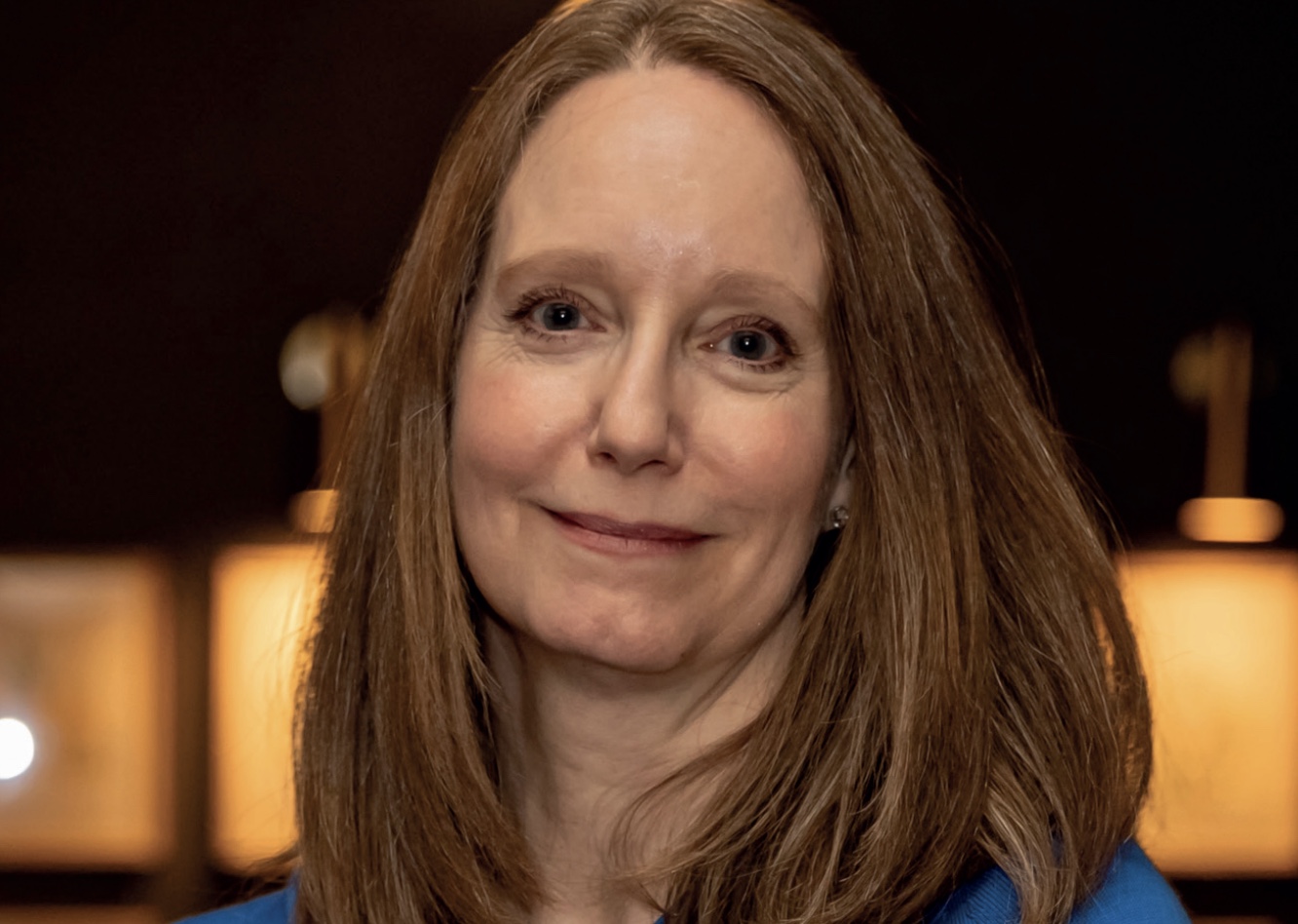
Beth Rehman is the new MD heading up Perle Hotels and they have plenty planned for this year. Susan Young caught up with Beth to find out more.
When I caught up with Beth Rehman, the recently appointed Managing Director of Perle Hotels, she was on the Isle of Skye, at the group’s Marmalade Hotel. Beth is one of only a few female managing directors of a Scottish hotel group, and she has been at the very heart of Perle since its inception a decade ago.
Not only is Beth the business’s new MD, but she is also a co-founder and is very proud of the fact that the group has just gained a King’s Award for Enterprise, which follows the Queen’s Award for Enterprise awarded to the business over five years ago—especially as she got to meet the King at Windsor Castle.
 Beth’s hospitality journey began when she co-founded Perle Hotels with her husband, Fasih, ten years ago, driven by a shared dream to modernise the Scottish hotel experience. Beth, who hails from New Jersey, originally qualified as an accountant and worked around the world for Deloitte, which included a stint in Russia just as the banking system crashed.
In her previous life, she was also President of two schools, and after moving to Scotland— initially to join Deloitte, where she met her husband-to-be—she then moved to Standard Life as Head of Internal Audit for Bank and Investments before taking the role of Head of Investor Relations for the company.
Although she started her career in accountancy, her first work experience was, in fact, in hospitality. She reveals, “I was a waitress in a small Italian diner in the U.S. I really got the bug. I loved my customers, and I loved the immediate response of giving good service and getting a great tip. In those days, we did 12-hour shifts, and I loved getting to the end of one and feeling, ‘Wow, we did it.’”
Before starting Perle Hotels, she and her husband explored Scotland and stayed at various hotels on their travels. But, says Beth, “We both felt that the quality of hotels at the time really existed in a bygone era. That had charm, but in our view, they weren’t speaking to the modern traveller.”
She continues, “It takes a long time, and it takes a lot of investment, to create a modern hotel, and not every hotel owner—particularly independent hotel owners—has the ability to do that.”
The Rehmans both dreamed of creating a hotel for the modern traveller. So, when an opportunity came up to buy three hotels out of administration, they jumped at the chance.
The Rehmans founded Perle Hotels, and the group took over the running of The Broadford, Marmalade, and Bosville Hotels.
Says Beth, “It was a natural progression, as we were already very entrepreneurial. My husband was in private equity, and I had worked on lots of different projects with various types of companies. As an accountant, you see both functioning businesses and non-functioning businesses. That’s part of the learning experience, and we were ready to create our own brand of hotels.”
 Certainly, from the get-go, Beth put that into practice and was Brand Director of the group for the first ten years. She explains, “After we bought the hotels, we developed the brand around the whole idea of the string of pearls, but using the French and German spelling of Pearl – Perle.
“The idea of a pearl was that each one is unique. We can take a building and make it a pearl by giving it a certain level of quality, and then, once you put them all together, you get a string of pearls. The idea of Perle is that it was a name that we could carry on into being an international group eventually,.”
The Perle Hotels group now operates five boutique hotels in Scotland, including The Bosville, Marmalade Hotel, and Bracken Hide Hotel on the Isle of Skye, plus Glencoe House and The Perle Oban and Spa.
The Bracken Hide, a four-star luxury wilderness resort hotel, is to benefit from 18 new luxury hides, which will be installed by this spring, doubling the number of rooms the hotel offers.
The group will also open The Edinburgh 16-20 in the capital later this year. In fact, Beth reveals she has 12 projects currently underway, which means she has certainly got her hands full.
 All of the group’s hotels have a contemporary style, but they are by no means identical. Says Beth, “With each of our hotels, we try to give customers a feel of where they are.
“For instance, when you are at the Marmalade Hotel, you really feel like you are on Skye. Our hotels have a sense of being local rather than any sort of cookie-cutter hotel. And we’ve tried to keep that through all of our renovations as we’ve gone through.
“We wanted to develop hotels that were very modern in the scope of their amenities but still reflected the locations that we’re in.”
Today, she collaborates with professional teams, including Malcolm Duffin Design, to keep the hotel designs fresh. “We’re always thinking about how to maintain continuity while also refreshing our spaces,” she explains.
“Last year, we transformed one of our restaurants into a brasserie, creating a cohesive feel across all our properties.”
I asked Beth what she thought the difference was between a functioning and a nonfunctioning business. She told me, “It has to know what it is, and has to know who it is targeting and what it’s trying to be.
“And that is the start and end of it. If you get to the right people, you focus on the right market, and you get that market in, they are looking for that experience. They will enjoy themselves or they’ll use you for the right reason.
“For instance, a budget hotel that offers stays for business people that are very costeffective has a market, and they’ll get the right reviews for that purpose. People will look at them for value. They’ll look at them for the simplicity of what they’re offering. And people will give them good reviews on that basis.
“If you try to be all things to all people, that’s when it doesn’t work. You have to know who your market is. You really do. You have to know what type of person you are targeting and what you are offering them when they get here.
“We are a leisure hotel group, so we are not focused on business people staying with us— that is not our market. We try to know who our guests are and what experiences they want. And when they stay with us, we try and find out more about them.
“We try to do analysis every year on where people come from, how long they stay with us, and what they’re doing when they stay with us. These types of data points are really important, and we’re trying to do a bit more of that every year because the more you understand about your data, the more you know your customer.
“We don’t do it to just target people, but we like to know whether the people who are coming to our hotels are the right type of person. Are they enjoying their stay for the right reasons? This allows us to make decisions like, do we do more of the same, or do we change things?
“One of the things that we’ve done in the last couple of years is really focus on that wellness element of our business, ensuring that we have this capability. And we’re just bringing that to fruition in 2025.
“We hope all our hotels will offer some wellness capability because that is something that people are looking for. We have installed saunas in all of our hotels and some hot tubs. We are also encouraging our guests to get out and about and really enjoy nature by taking that moment to stop and breathe.”
As well as enjoying offering travellers the perfect location to unwind, Beth and her husband love travelling too.
“Travel is great. You’ve got to keep moving, but it also feeds the brain, doesn’t it? Travel is really part of expanding your mind, opening your mind. Choosing places that either give you that new interest, open up a new world, or give you a chance to shut off from the world are very important.
“I travel a lot for work too. I like to do research trips. For instance, last May we visited five different hotels in Northern Italy to see what’s happening in the market there. And that is really a good market because it developed in a very similar way to Scotland.
“I also do a lot of reading on what other hotel groups are doing, how their strategy is, what they’re interested in—you know, that helps when it comes to us developing to the next stage.
“No matter when I travel, I’m always photographing things. My phone is full of photographs of different ideas. It’s not even just necessarily hotels. Sometimes I see things in other businesses, which I think is a good idea. It might be the way they take care of their staff or the way they are organising themselves. I think that’s always really interesting to keep an open mind.
“There are many things outside of this industry that we could adopt. Sometimes it’s as simple as looking at staff benefits in other industries and seeing if we can learn from them.
“I also look at whether the new trends are coming up, particularly just now looking at food trends. For instance, this year I think the umami flavour route will prevail.
“We have always used local produce, but there is going to be even more focus on local moving forward. We are also going to introduce more foraging. We already do this for our restaurants, but we are planning on doing more. We will also be using more venison and seafood.
“I don’t think we’re necessarily following a trend. The trend just happens to marry up with what we’ve been doing and will probably continue to do, which is source locally, find good produce, and cook it well. And we are always looking for chefs who are interested in developing menus that use local produce and use their skills to really cook well.
“I think all chefs want to use fresh ingredients, and it’s just that sometimes the hotels that they’re in, or the restaurants they’re in, can’t afford to invest like that. It’s a kind of a dream, I suppose, for many of them to be on an island where you get fresh seafood and such like.”
Despite the success, Beth acknowledges the challenges the hospitality industry faces today. “The upcoming year is going to be tough for many,” she admits.
“Rising costs—including wage increases, the national insurance rise, and operational pressures—are significant hurdles, especially for smaller hotels. It’s crucial that we support one another, as this sector is vital to Scotland’s economy.”
So, what does she make of the tourist tax? “In Scotland, we are fortunate in that we do have a lot of international visitors coming,” she says.
“I think it would be too early to say what the impact of the tax would be. I think it would be good for politicians to listen to the industry because there are lots of examples of tourism taxes around the world that work and work well for the purposes that they’re seeking to achieve.
“How it’s done, and whether it is done fairly and effectively, really matters. I know that there’s been some good work done by people from the industry to really raise the profile of the concerns of the industry.
“I think that needs to be a focus to get it right. If we get it right, in the long term, it will be sustainable and could help the local infrastructure, which in turn supports this industry. We have to look at other countries where it has worked, understand why it worked there, and work out what impact we are trying to achieve and what message we are sending to tourists.
“Sometimes the government rushes in without due consideration of what’s required to make it work. I think without people like Marc Crothall of the STA, it would be more difficult to get our point across to politicians.”
She also admits that despite Perle’s success to date, she is only too aware of the challenges facing hospitality and is actively addressing them by focusing on efficiency and enhancing the work environment for staff. Recognising that happy employees lead to satisfied guests, the company has revamped staff accommodation, transforming it from basic lodgings into comfortable living spaces that foster a sense of community.
“We want our team to feel valued and supported,” she emphasises. “We’re building three new staff accommodation blocks, and we’ve refreshed almost all our existing staff accommodation this year. We know we’ve got to be providing not just the bare minimum of bunk beds in a square space, but a comfortable living environment.
“This is a lifestyle choice for people to come to an island and work, and the better we can make it, the more people will want to be here. It makes a real difference for people if they’re living in good accommodation. They can settle, find a lifestyle, make friends, and really be a part of the community.”
Beth’s commitment to community, employee well-being, and a clear brand vision positions Perle Hotels as a beacon of innovation in Scottish hospitality. It’s hardly surprising to hear that future expansion plans include operating hotels for other people.
Beth says, “We’re in talks with some people about running their hotels. We’ve got a great system, we’ve got great people, we train people well, we’ve got a good support network and a central office function in Edinburgh. So our next step is really helping other hoteliers.
“Just because you own a hotel doesn’t necessarily mean you’re the best person to operate it. We aim to provide that solution.”
Beth obviously lives and breathes Perle Hotels, but I asked her if working and living with her husband meant that it was work, work, work.
She smiles, “He focuses on the financing, vision, and strategy, while I handle day-to-day operations and branding projects. Although it can be a challenge to keep work discussions from spilling into personal time, we have learned to set boundaries to enjoy life outside of work while maintaining our passion for the business.”
She tells me, “It is exciting. It really is. When I came back after Christmas, the team said I looked really happy, and I was. I am just really excited for this year.”
And with that, she headed off to her writing group—yes, she makes time for hobbies too! I’ve just not to mention her knitting!.
