

By Susan Young
Nestled in the heart of Inverness, Highland BlindCraft has been shaping comfort for hotels and homes across the UK for over 145 years.
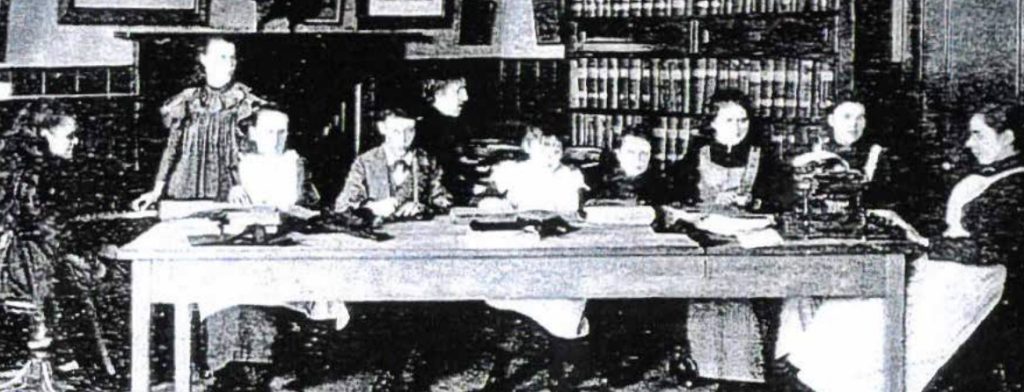
Its story begins not with furniture, but with a vision: in 1881, John Charles (J.C) Gordon, a local philanthropist and passionate advocate for social inclusion, opened a school on Ardconnel Street for blind and visually impaired children from across the Highlands.
Mackenzie’s mission was simple. To provide education for the blind – and as well as schooling it was also a home. It accommodated 18 blind scholars, aged 8 to 16, offering both standard schooling and industrial training. Boys were taught the art of basket weaving, while girls mastered sewing skills – but Mackenzie soon realised that to allow each child to be independent as an adult they needed to earn.
By the early 1900s, the school had evolved into BlindCraft and a shop on Castle Street in Inverness which showcased their products to the wider public, giving the enterprise a commercial dimension while continuing its social mission giving employees with disabilities the same rights and working conditions as their able-bodied colleagues – a principle that continues to guide the factory today.
In 1918, BlindCraft expanded and opened its current factory at 39 Ardconnel Street, a location that has been extended and modernised over the decades. Through all these changes, the core philosophy has remained the same: empowering individuals through meaningful work.
Today, Highland BlindCraft, is still a charity, and continues Mackenzie’s vision, expanding opportunities to individuals with a variety of disabilities. While it no longer functions as a school, training remains at the heart of the operation.
Team members can develop their literacy, numeracy, IT skills, and craft-specific expertise, with the goal of helping them build confidence, independence, and practical experience.
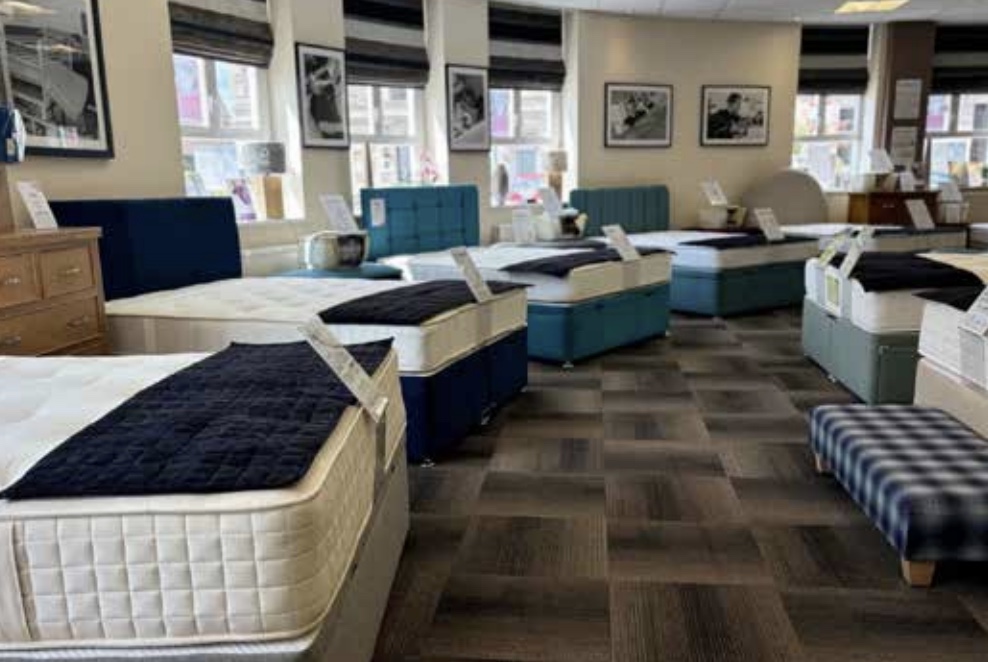
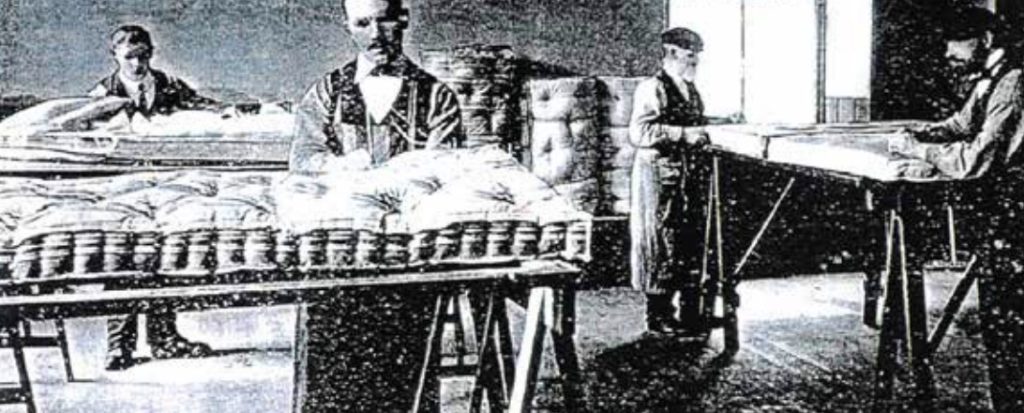
The factory has become a place where skill and social responsibility intersect, producing ethically made, high-quality products designed to last. From humble beginnings in basket weaving, Highland BlindCraft now produces beds, mattresses, headboards, divan bases, footstools, and ottomans – all handcrafted in Inverness by their own workforce.
I was shown around by Neil Thomson, operations manager at Highland BlindCraft, and Rachel Oag, Marketing Coordinator and during my visit, it was clear how meticulous the process is.
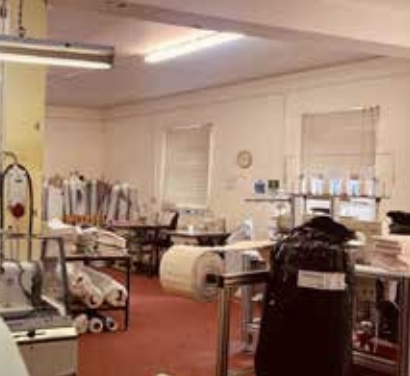
I saw how the headboards were assembled, how they made the bases and the mattresses. I got an education on the art of mattress filling, and saw its spring store. Every component is carefully assembled by hand – from stitching to finishing, attention to detail ensures both durability and comfort.
For hoteliers, this translates into products that combine bespoke design, lasting quality, and ethical production, all sourced locally.
 On my visit, I met Josh, who joined Highland BlindCraft through a local jobs initiative on a 12-month placement. Neil explained, “Josh is on a one-year fixed-term placement, and he’s already learned a whole range of new skills, including mattress making. He’s done exceptionally well- – he’s even been out on deliveries in the van. Last week, he completed his first aid course, which is another valuable qualification under his belt. It’s great to see him building both confidence and practical experience.”
Neil went on to describe how the factory recruits new team members, “We very rarely advertise job openings. Most of the time, people reach out to us directly-sometimes via Facebook asking if we have any positions.
“More often, we connect with organisations we work closely with, or we receive emails from parents who want to explore opportunities for their children. We also offer tours of our factory, so people can see what we do and understand our approach, and we keep interested names on file for future openings. Overall, turnover is lowmost of our staff stay with us for the long term, which benefits both our team and the quality of the products we make.”
Curious about production timelines, I asked how long it takes to make a double mattress from start to finish. Neil replied, “It really depends, but generally, you could complete one in about an hour to an hour and a half. Most of the components are already prepared, so it’s really just a case of fitting the springs and assembling the pieces.
“Everything is very well organised, which helps a lot. We also make a wide variety of sizes and shapes-round, square, or even beds with cut-out corners for more intricate designs. Flexibility is key for both our retail and hospitality clients, as we can accommodate unusual specifications without compromising quality.”
Ethics and sustainability are deeply embedded in Highland BlindCraft’s operations. From responsible sourcing of materials to mattress recycling programs, every product supports both the Inverness community and the environment.
Old mattresses are taken back through a comprehensive recycling scheme, with metal, fabric, and fillings separated for reuse rather than landfill disposal.
For hotels, this service ensures responsible product lifecycle management, compliance with environmental regulations, and continued guest comfort and safety.
Sustainability also extends to day-to-day production practices. By minimising waste, using ethically sourced materials, and maintaining high standards of craftsmanship, Highland BlindCraft aligns with the growing expectations of environmentally conscious clients.
Hotels increasingly seek suppliers who share these values, and Highland BlindCraft delivers-offering peace of mind that every bed, ottoman, or upholstered chair is made, delivered, and recycled responsibly.
For hoteliers, working with Highland BlindCraft means more than sourcing furniture. It’s about aligning with a brand that prioritises quality, heritage, and human potential. Each piece tells a story of empowerment-of people gaining skills, confidence, and independence. It’s a narrative that resonates with guests who value authenticity, social responsibility, and craftsmanship.
From James Mackenzie’s pioneering home for blind children in the 19th century to a modern supplier serving hotels and other customers across the UK, Highland BlindCraft demonstrates that heritage and innovation can coexist with commercial success.
For hoteliers, this means partnering with a manufacturer who understands the demands of guest comfort and aesthetic excellence – a business built on vision, care, craft and sustainability.
Here’s to the next 145 years!
