

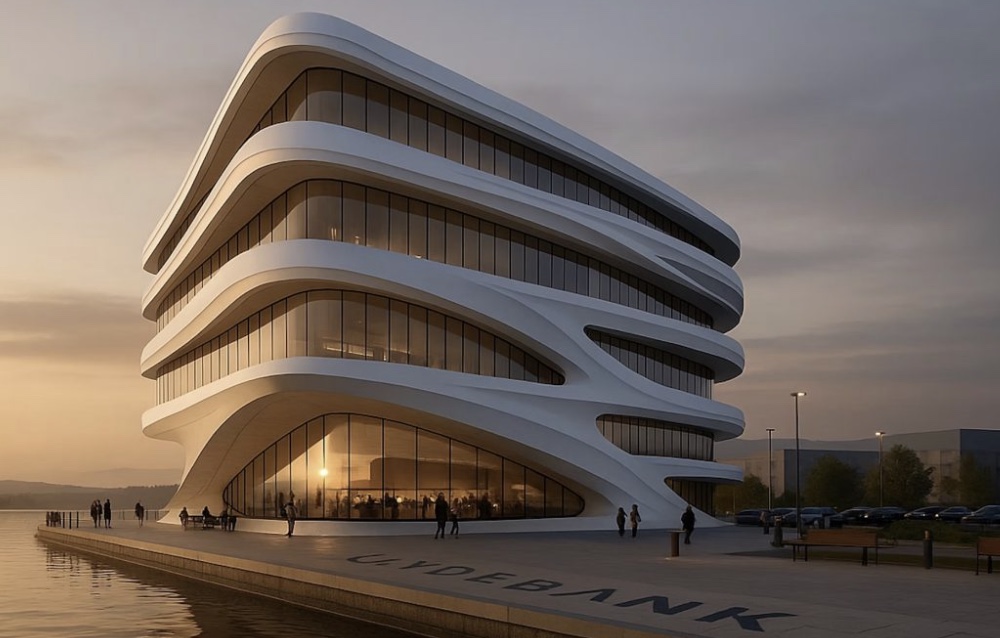
Plans for a new hotel at Clydebank’s Queens Quay have moved a step closer after West Dunbartonshire Council approved a planning permission in principle application for the proposed Clydebank Riverside Hotel at Ossian Way. The application was submitted by Montgomery Developers, with Environmental Design Scotland acting as agent.
The scheme is for a five-storey Class 7 hotel beside Clydebank Leisure Centre, with a café/restaurant, meeting rooms and rooftop lounge, along with modest parking, cycle storage and associated access and drainage works. The project has been promoted as part of the continuing regeneration of Queens Quay.
The application had previously faced refusal after the Coal Authority objected on land-safety grounds because a Coal Mining Risk Assessment had not been provided. That changed after the assessment was submitted in January, allowing the objection to be withdrawn and the proposal to move forward.
Design material published when the project was first unveiled showed an all-electric hotel with a ground-floor river gallery, food and drink space and a rooftop venue overlooking the waterfront. The design has been framed around Clydebank’s shipbuilding history, the River Clyde and the wider setting of Queens Quay.
When the plans were first lodged last year, Environmental Design Scotland said the project “looks to the future of Clydebank: an all-electric, low-carbon hotel with blue-green infrastructure, bird-friendly glazing and flood-resilient public realm.” That earlier statement also described the building as part of a wider attempt to create a new hospitality destination on the waterfront.
Developers have said the hotel could create 80 to 100 full-time roles across front of house, housekeeping, food and beverage, kitchen, events, engineering and administration.
The approval appears to be for permission in principle rather than full detailed planning consent, meaning further applications are likely before construction can begin.
Picture: Environmental Design Scotland
