


 As 2025 drew to a close, Scotland’s hotel sector found itself in a markedly different place from the previous year. The challenges still haven’t disappeared, but the mood across the country’s hotels has shifted to something more outward-looking and determined.
After years of uncertainty, cost volatility, and difficult operational decisions, the past 12 months have been defined by investment. Considered, strategic, often phased but investment nonetheless. The sector is quietly preparing for 2026 and beyond, laying foundations for a more competitive, experience-driven market.
One of the clearest signs of this change has been the volume and scope of redevelopment projects either completed or announced this year. Wellness is becoming one of Scotland’s strongest year-round demand drivers, and a lot investment centred around creating and improving spa facilities.
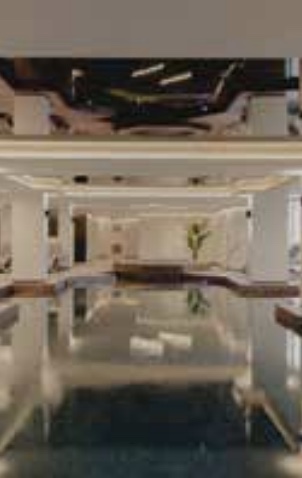
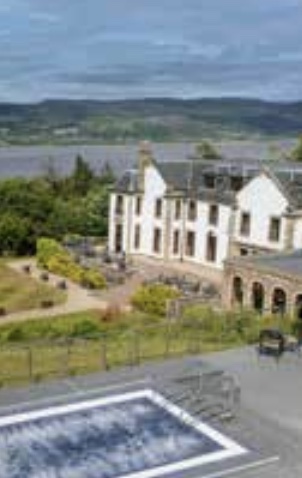
For instance Gleddoch Golf & Spa Resort , overlooking the Firth of Clyde, went all in with its spa redevelopment with its owners choosing not just to refresh but to reposition with the creation of the Imperia Spa. The investment isn’t cosmetic; it is directional. and Gleddoch’s work to elevate its facilities positions it firmly in that conversation.
The Old Course invested in its Kohlers Water Spa while Cameron House at Loch Lomond also revamped its Spa facilities as did Lochgreen Hotel in Ayrshire. Meanwhile Simpsinns is about to launch a new spa at The Waterside in West Kilbride. These projects hint at how operators are planning for 2026: by amplifying leisure experiences that increase resilience across all seasons.
And not forgetting Ayrshire-based RAD Hotel Group currently investing in Seamill which it bought last year. The refurbishment of the Firth Pavilion and enhancement of guest-facing spaces are strategic moves grounded in understanding why guests travel there – coastal weddings, family celebrations, and accessible luxury.

Yet they are also among the groups hardest hit by recent Scottish rates reassessments, with Lochside Hotel in New Cumnock facing a dramatic increase. There are already calls for the Scottish government to step in and address this new challenge before it damages upcoming investment plans. Scottish hotels are reinvesting not merely to maintain market share but to strengthen positioning for the years ahead.
Apex are a prime example. It has just announced that it has rebranded as Apex Hospitality Group (AHG), as the family-owned business expands across urban and rural hospitality markets. It has evolved as the market has evolved and no longer is wholly focussed on city centre hotels – it has branched out into country and regional offerings with the likes of Dunblane Hydro and Pine Trees in Pitlochry. Major estates have also taken bold steps.
Mar Hall, one of Scotland’s most recognisable luxury properties, continued its significant redevelopment programme in 2025. Substantial in scale and vision, the project is gradually transforming the estate into a fully reimagined luxury resort. With extensive restoration, its wellness upgrades, and a redefined guest experience, Mar Hall signals both a commitment to the high-end market and a belief that Scotland can compete internationally for affluent leisure travellers. The hotel’s progress highlights a broader trend: Scotland’s luxury market is entering a new investment cycle, driven by owners who understand post-pandemic guests will pay for exceptional quality – but only when that quality is unmistakable.
At Murrayshall in Perthshire they unveiled in a collection of luxury pods, marking the first phase of a £30 million transformation project.. The new accommodation increased the estate’s capacity by 50% and were designed to blend modern luxury with the spirit of the Scottish outdoors, providing guests with a unique base for weekend adventures or peaceful countryside retreats.
Beyond the Central Belt, investment momentum has been equally visible. The Cairndale in Dumfries, one of the most established family-owned hotels in the south, has pressed on with its multi-million-pound redevelopment.
 Improvements to leisure facilities, upgraded bedrooms, refreshed interiors, and enhanced public spaces demonstrate a deep commitment to a regional hotel that plays a vital role in its local economy.
The Cairndale’s strategy throughout 2025 shows that investment outside major cities is not only possible but increasingly necessary, as domestic travellers continue seeking meaningful experiences in Scotland’s lesser-explored regions.
Over the year, more than twenty hotels across Scotland opened or completed redevelopment phases, from urban lifestyle concepts in Edinburgh and Glasgow to country houses in Aberdeenshire and the Highlands.
Several openings are repositionings rather than new builds, reflecting owners’ desire to modernise existing assets: improved wellness offerings, upgraded rooms, elevated dining, expanded events capacity, and more defined brand narratives.
This sits against continued operational pressure. Utility costs remain high, insurance premiums have soared, and staffing remains a structural challenge. Many operators faced difficult wage decisions as cost-of-living pressures influenced recruitment and retention. Yet the willingness to invest despite these headwinds shows an industry thinking beyond the immediate balance sheet.
Owners increasingly understand that delaying capital expenditure only compounds problems later, especially in a competitive market where guests are discerning and globally experienced.
What 2026 holds will depend on several factors. Stabilisation of energy costs and inflationary pressures will influence owner confidence, while global economic trends will shape inbound travel. Staffing will remain central, likely pushing hotels to invest more in training, career development, and workplace culture.
Guest expectation remains the most important driver. Hotels that invested wisely in 2025 – upgrading facilities, clarifying identity, and building experiences that feel uniquely Scottish – are positioning themselves well for the year ahead.
If 2024 was the year Scotland’s hotels regained equilibrium, and 2025 the year they rebuilt momentum, then 2026 has the potential to be the year the sector emerges with fresh ambition.
Investments at Gleddoch, Seamill, Mar Hall, The Cairndale, Links House, and dozens of other properties illustrate a hospitality landscape that is not only enduring but evolving.
Main Picture: Dunblane Hydro recently acquired by Apex Hospitality Group
